X-ray protective glasses
MAVIG uses only the highest quality radiation protection lenses. This guarantees you the best transmission values and high break resistance of the lenses. The ideal composition of chemical substances and sophisticated production processes ensure maximum radiation absorption with absolutely homogeneous distribution of the additives.
Special quality features optimise their use in the medical field:
- Frames made of high-quality plastic material with high dimensional stability
- A balanced ratio between lightness and strength
- The materials used ensure maximum allergy-free properties
- The shape and material help to prevent the risk of injury
- Easy to clean and very good resistance to chemical influences (resistance to disinfectants)
- We are happy to produce corrective lenses for you: single vision, bifocal or varifocal
“State-of-the-art eye protection”
X-ray protective glasses:
X-ray protective glasses are available in a wide variety of designs.
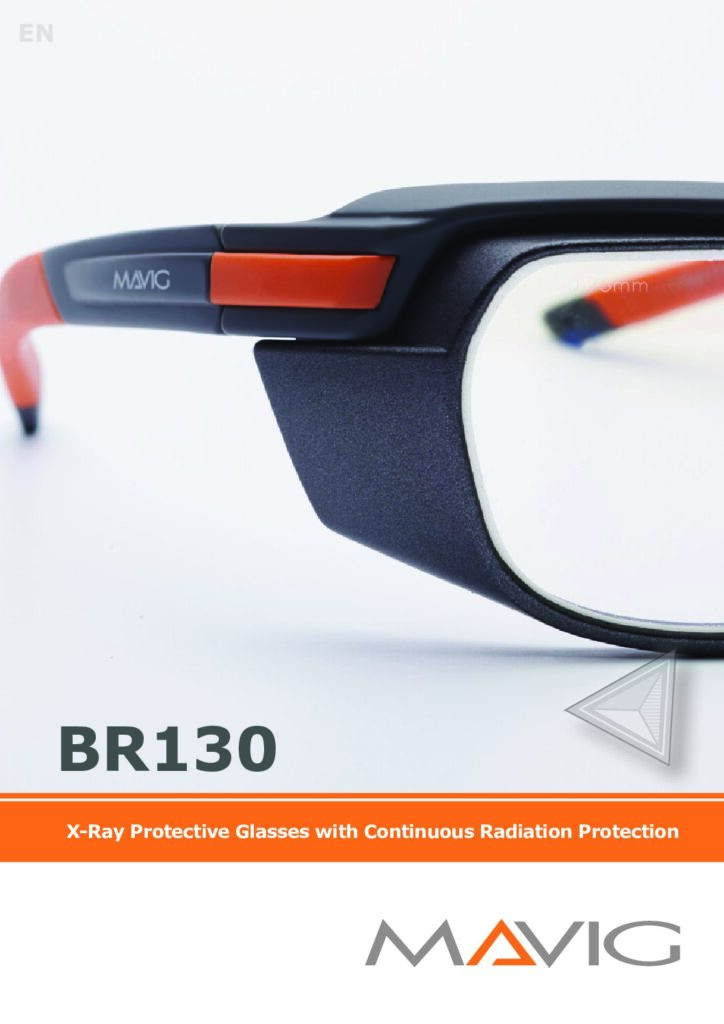
BR130
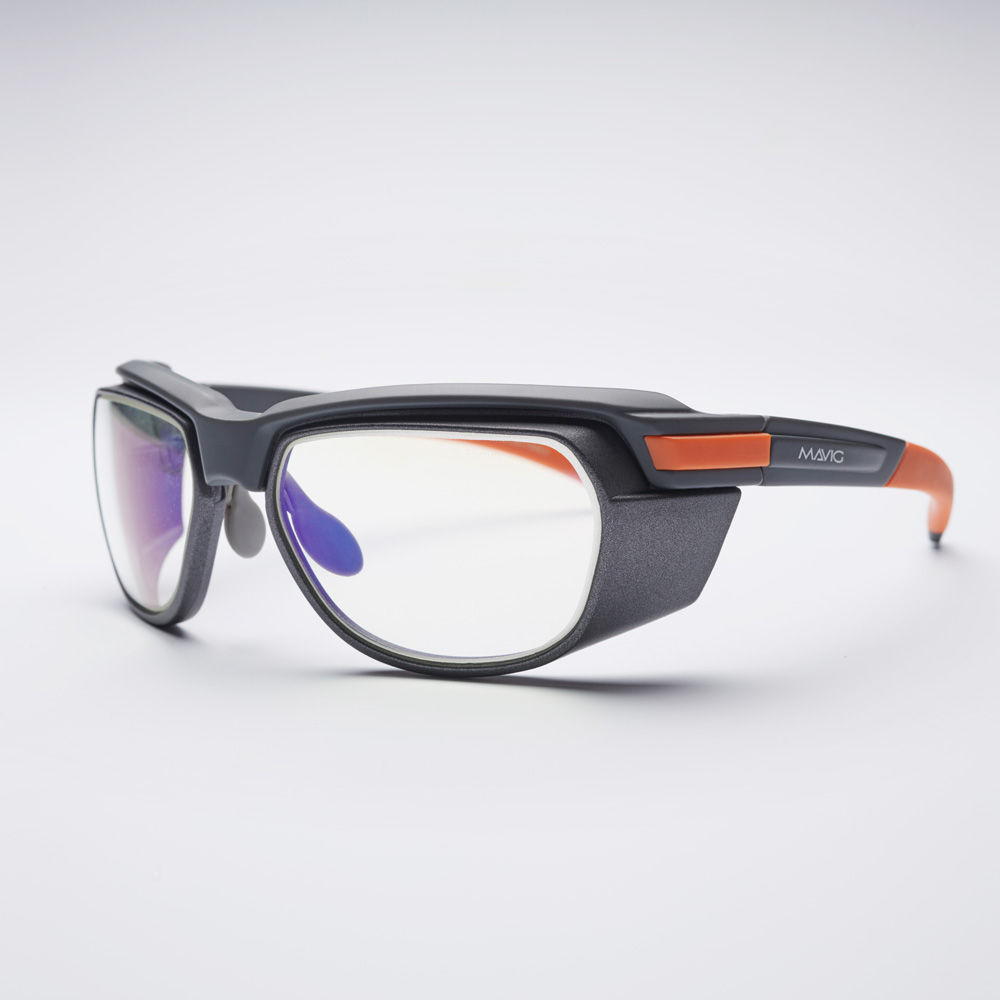
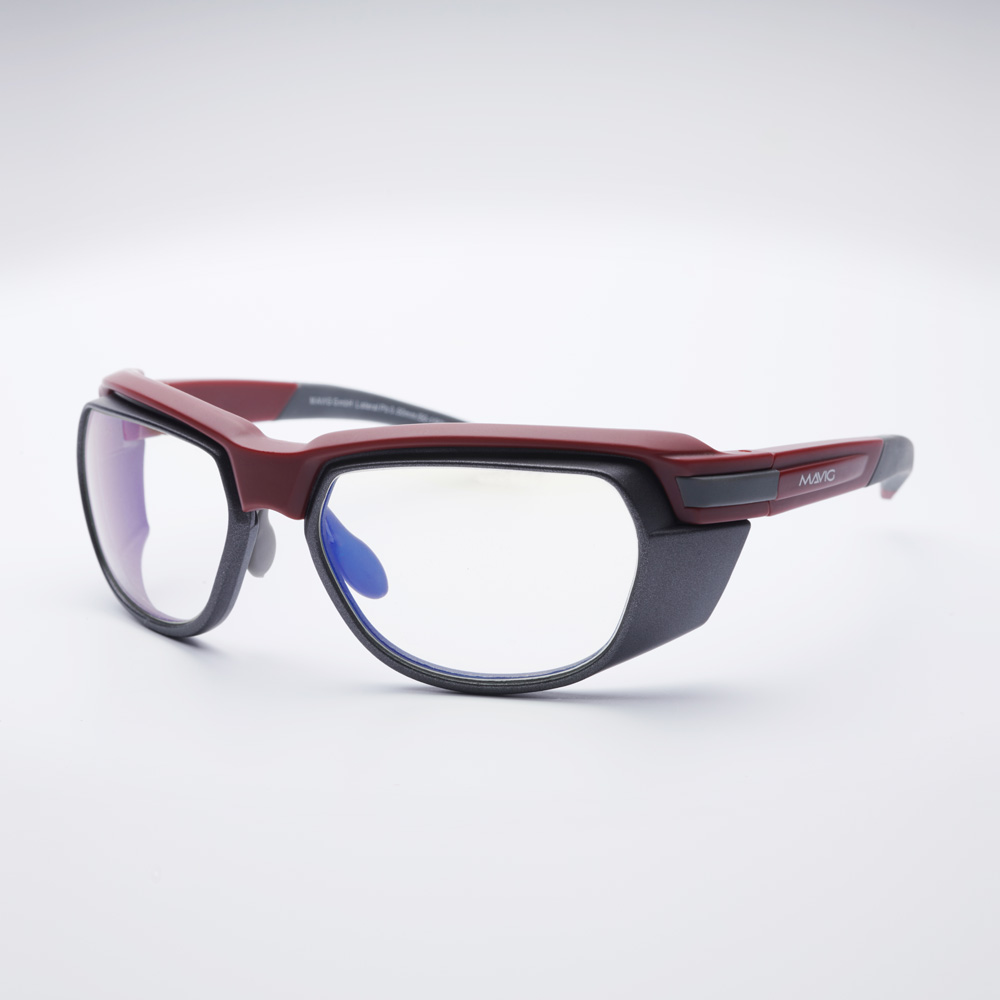
The anatomically optimised design of the BR130 X-ray protection glasses provides continuous radiation protection – from the nose to the temples.
– Front protection: 0.50 mm Pb or 0.75 mm Pb
– Side protection: 0.50 mm Pb
– Sizes: universal/adjustable
– Weight: approx. 95 g (0.50 mm Pb) / approx. 107 g (0.75 mm Pb)
- NEW: Complete eye ring with integrated side protection made from the lead-free plastic compound “Trielle”
- Patented composition, lead equivalent 0.50 mm Pb
- Compliance with IEC 611331-1:2014
- Anatomically tailored fit
- Soft, adjustable nose pad and rubberised ear pads
- Various designs (shiny onyx/graphite, shiny onyx/bordeaux)
- Radiation protection lenses with optimum protection
- Standard anti-reflective coating
BR126
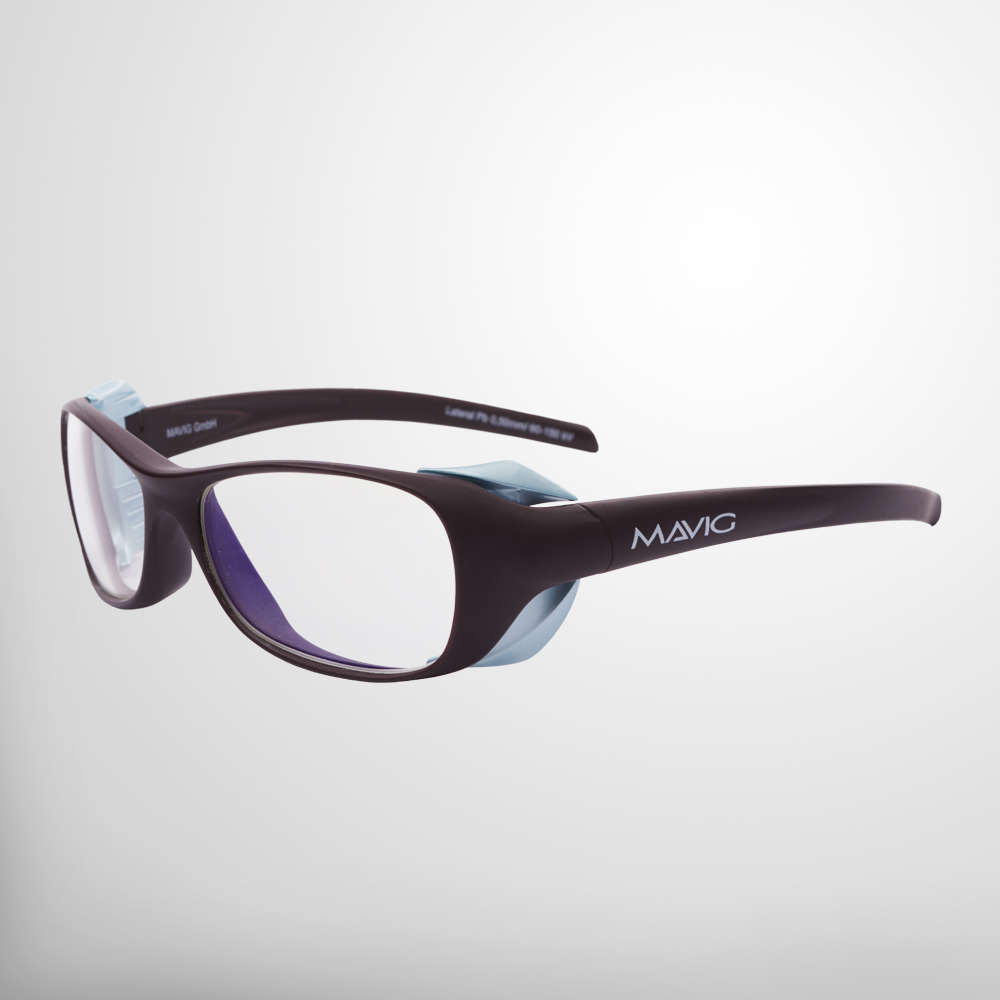
The BR126 is designed to provide the user’s eyes with the best possible protection against scattered radiation from all angles of incidence thanks to large-area X-ray protective glazing and two lateral radiation protection zones close to the front lenses.
Front/side protection (weight):
– Pb 0.50 mm/0.50 mm (approx. 80 g)
– Pb 0.75 mm/0.50 mm (approx. 85 g)
Sizes: S/M and L
Colours: Sandstone/Orange, Cocoa/Light Blue

- Optimised lateral radiation protection
- Standard anti-reflective coating on lenses
- Optical corrections available as single vision, bifocal and varifocal lenses
- Easy to clean and highly chemically resistant (resistant to disinfectants)
BR115
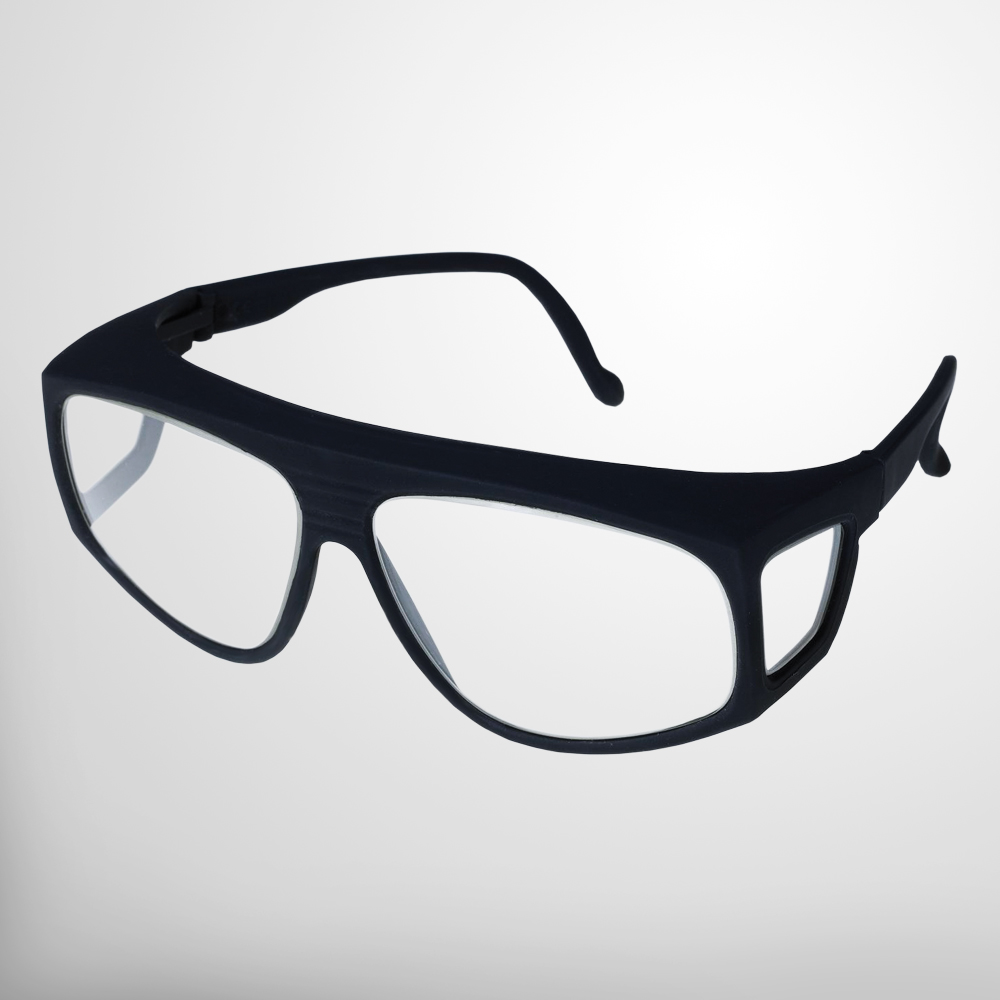
BR115 X-ray protective glasses with slightly curved front lens and a lead equivalent of 0.75 mmPb. An extremely robust plastic material makes cleaning easy and also offers very good resistance to chemical influences (disinfectant resistance). A matching glasses case and a soft glasses strap are included in the scope of delivery.
Front and side protection: Pb 0.75 mm
Universal size
Weight approx. 110 g
Colour: black
- High break resistance
- Maximum radiation absorption
- Best transmission values
- Glasses case and soft glasses strap included in delivery
- No corrective grinding possible with this model
BR119
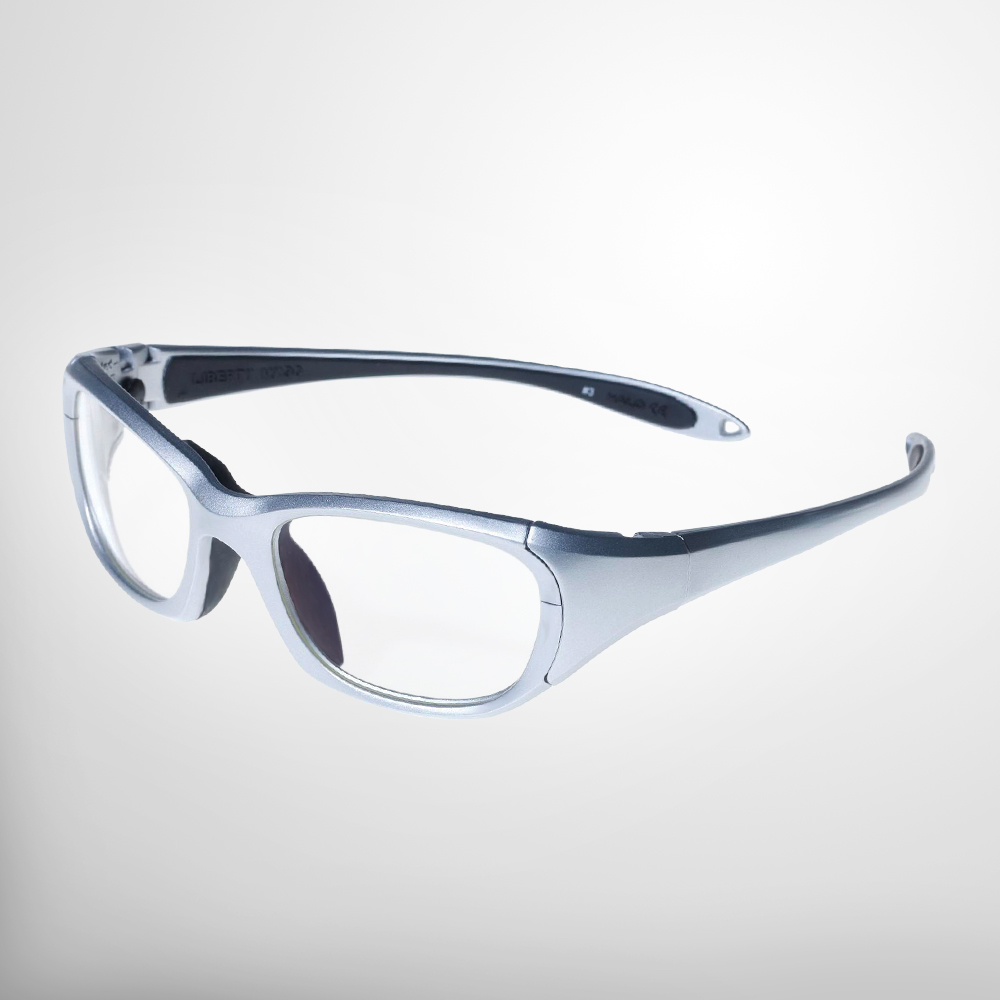
BR119 X-ray protective glasses with curved front protective lens and a lead equivalent of 0.75 mmPb. An extremely robust plastic material makes cleaning easy and also offers very good resistance to chemical influences (disinfectant resistance). A matching glasses case and a soft glasses strap are included in the scope of delivery.
Front protection: Pb 0.75 mm
Universal size
Weight approx. 65 g
Colours: silver and black
GENERAL INFORMATION:
When purchasing radiation protection goggles, please bear in mind that goggles that only protect the front are only effective when the radiation is incident from the front. As soon as lateral radiation is to be expected, e.g. when the head of the radiation user is moved in the secondary radiation area, front protection glasses are useless and, according to some experts, even dangerous due to increased radiation exposure from the tertiary effect. It is essential to observe the principle that radiation protection glasses that provide both front and side protection must be used in radiological procedures where lateral radiation exposure cannot be ruled out, e.g. during monitoring, assistance, etc.
The legally stipulated annual dose limit for the eye lens is 150 millisieverts for persons over the age of 18 who are exposed to radiation in their work. In addition to this limit, the X-ray Ordinance (RöV) stipulates a minimisation requirement, which states that radiation exposure must be kept as low as possible, even below this limit.
Radiation cataract refers to long-term damage to the lens of the eye, which is the most sensitive part of the eye, after exposure to ionising radiation. This leads to subcapsular vacuole formation and a disc-shaped posterior polar opacity. The sensitivity of the human eye to radiation exposure is also illustrated by the following example: opacities of the lens of the eye have been observed in young patients at doses as low as 200 roentgens.
Virtual fitting and selection assistance Correction grinding
Virtual fitting of MAVIG radiation protection glasses
Selection guide for glasses with corrective lenses
The new MAVIG Excel tool allows you to enter values from your glasses prescription and select models that are suitable for you in advance: